Controlling astringency to make better food
We can build more delicious, healthy, and diverse food systems by unlocking the power of foods that are normally considered too astringent.

The drying, puckering sensation found when consuming red wines and some other fruit products can be a major barrier to enjoyment for most people. The sensation is unpleasant, and there may be some antinutritional effects. Astringency can be especially challenging for crops like aronia, chokecherry, acorn and black walnut. Other food products like banana skins could unlock new potential by solving this problem. It presents a barrier for normal people to access the health benefits and exploration of these food experiences.
The astringent sensation of these foods is caused broadly by the presence of polyphenols and especially tannins.
Astringency and Evolution
Despite this astringent sensation, animals seem to have no problem eating these foods in general. Squirrels nut over an acorn, and deer will happily munch on just about anything astringent. What makes them different? In all likelihood, their saliva is heavily dosed with proline, an amino acid that binds well with these chemicals. Animals spend extra energy producing salivary prolines just in case they happen to eat a tannic food. Humans, it seems, do not produce enough of these proline-rich proteins to make our foods of interest palatable.
What alternative strategies are available to us? We can use the fundamentally human technology of gastronomy. Food pairing can saturate our tastebuds with proline, and with cooking we can bind polyphenols to proline before they even hit the plate.
MyFoodData indicates that the foods with highest proline density seem to fit in the following categories:
- Gelatin leads the pack, and it's not even close
- Soy proteins like tofu and soy protein concentrate
- Cheeses, especially hard cheeses, and other concentrated milk products
- Egg white powder
- Various seeds, spices, cream of wheat, and spirulina
Proline Maxxing
I produced an aronia gelatin using unflavored gelatine. The texture came out ever so slightly goopier and less firm than a typical Jello product. I would guess that binding some proteins to tannins, alters the structural characteristics. You might want to add a little more gelatine than you typically would. Nevertheless, with plenty of added sugar, the result tasted great and dramatically different from simple aronia juice - with little to no astringency.
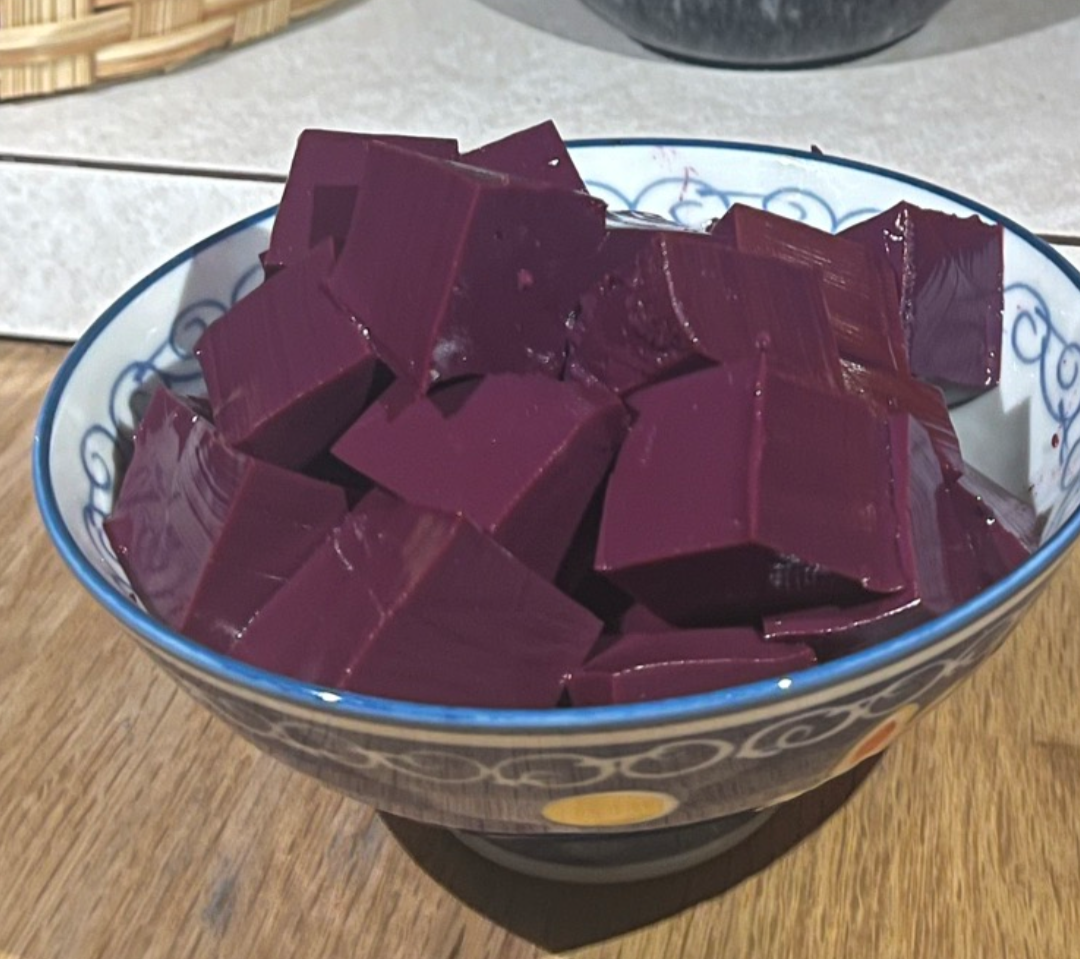
Mixing proline-rich proteins is also under research as a method of fining wines. The protein additives can be added to wines and then removed using a centrifuge or other technique. I can report that the relatively simple technique of 'filtering' astringent juices through tofu also seems to work quite well.
If you cannot find a suitable recipe or if you want to enjoy 'pure' or 'raw' produce, food pairing represents an alternative approach. Combating astringency is a key part of the science and theory behind pairing wines with cheeses. Some traditional practices which pair polyphenol rich berries with meats might also serve the same function.